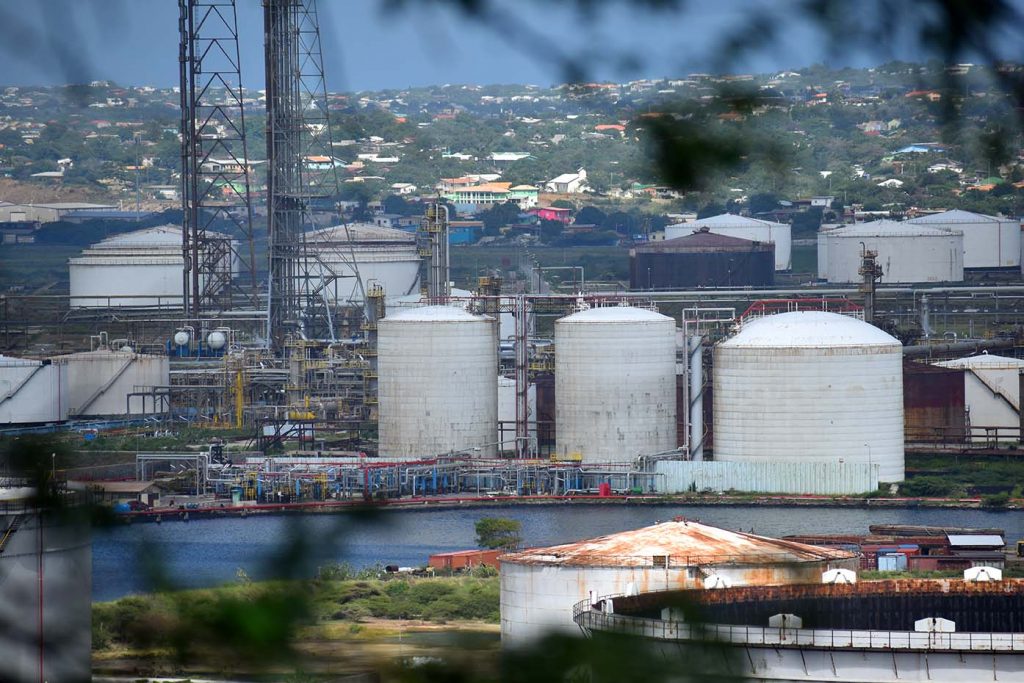
Fuel Oil Terminal Curaçao B.V. was established to serve the growing need for flexible, non-OFAC petroleum storage between the Americas, Europe and West Africa. From a single berth and a small tank farm, the terminal has grown into a fully integrated storage, transshipment and marine bunkering hub.
Today, our facility supports crude oil producers, refiners, traders and shipping lines with segregated tankage, deep-water jetties and round-the-clock marine operations, all backed by a team that treats safety as a first principle rather than a checklist.
The terminal began operations with one deep-water berth and a modest tank farm dedicated to fuel oil storage for regional shipping traffic.
Additional storage capacity, including heated tanks for heavy fuel oil, was added to accommodate a broader range of crude and refined products.
New jetty infrastructure enabled the terminal to accommodate VLCC and ULCC class vessels with no length overall restrictions.
With 17,750,000 barrels of capacity and integrated bunkering and vessel husbandry services, the terminal now operates as a complete energy logistics platform.
To provide safe, reliable and flexible petroleum storage and marine logistics services that connect producers, refiners and shipping operators to global energy markets — without compromise on safety or environmental responsibility.
To be the Caribbean's most trusted independent petroleum terminal — recognised for operational excellence, environmental stewardship and the reliability that international energy trade depends on.
No cargo movement or transfer proceeds without full safety verification.
Transparent inventory reporting and honest commercial dealings with every partner.
Consistent, round-the-clock terminal operations our clients can schedule against.
Protecting the marine environment we operate in, for the communities around us.
From vessel scheduling to tank gauging and quality assurance, our operations team follows standardised procedures designed to eliminate variability and protect product integrity across every transfer.
Every individual on our terminal — from dock workers to visiting ship crews — is empowered to stop any operation that raises a safety concern. Regular drills, toolbox talks and third-party audits keep that culture alive.